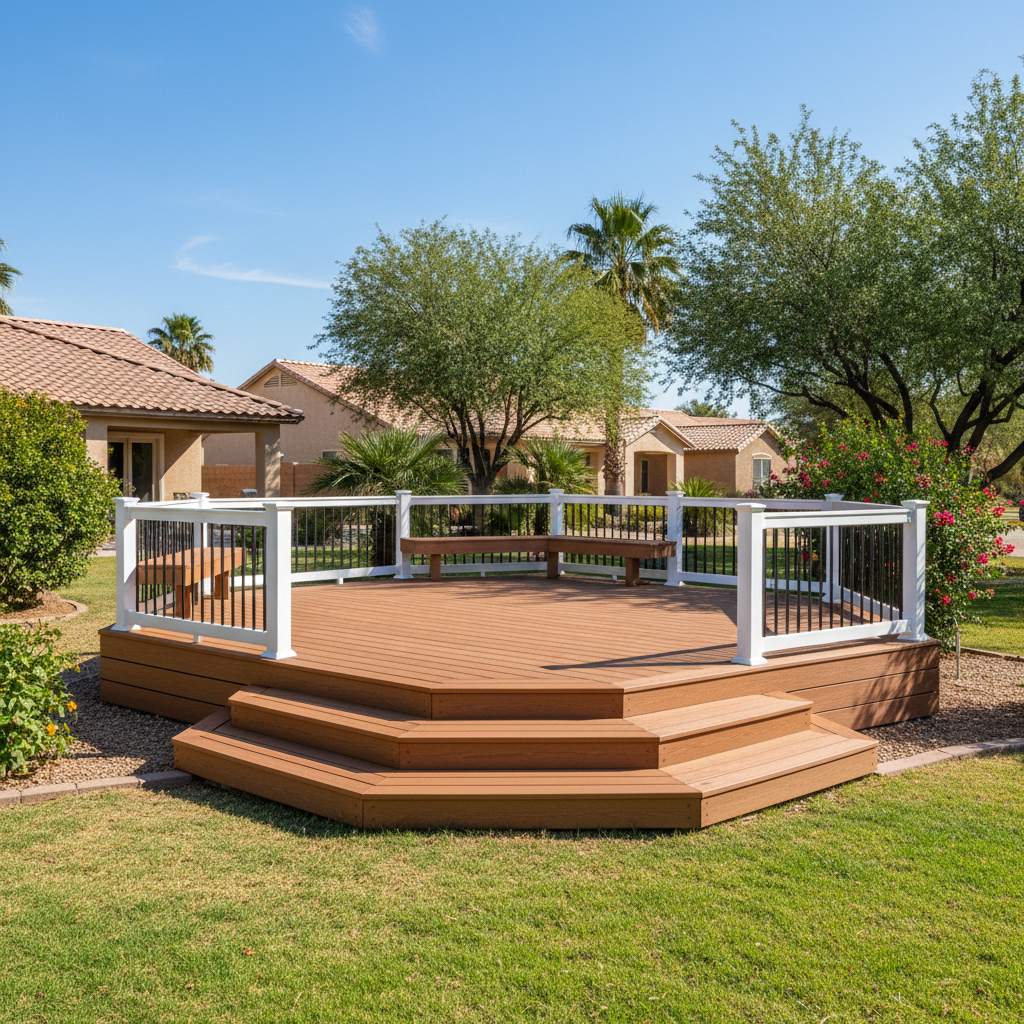
Alright, let's talk Trex decks and what they're gonna cost you here in Queen Creek. Everyone wants to know the bottom line, and I get it. It's a big investment, and you want to make sure you're getting a fair shake. I've built enough of these things to tell you straight up: there's no single price tag, but I can give you some solid numbers and what makes 'em wiggle.
What Jacks Up (or Lowers) the Price?
A few key things really drive the cost of a Trex deck. It's not just the square footage, though that's a big one. Here's what I look at when I'm putting together a quote:
- Deck Size and Shape: This is obvious, right? A bigger deck means more materials, more labor. But shape matters too. A simple square or rectangle is always cheaper to build than something with lots of angles, curves, or multiple levels. Every extra corner adds complexity and time.
- Trex Line You Pick: Trex has different tiers of decking, kinda like car models. You've got your basic Trex Enhance, then the mid-range Select, and the premium Transcend. Enhance is usually your most budget-friendly, while Transcend offers the most realistic wood grain and color options, plus a thicker shell for durability. The price difference between these can be significant, sometimes $3-5 per linear foot just for the boards themselves.
- Substructure Materials: Most folks here in Queen Creek want a sturdy, long-lasting deck, so we often build with pressure-treated lumber for the frame. But if you want to go all-out, a steel frame is an option. It's pricier, but it's incredibly strong and won't ever rot or warp. For most residential decks, treated lumber is perfectly fine and cost-effective.
- Railing Choice: This is a huge cost variable. A simple pressure-treated wood railing with balusters is the cheapest. Going with a composite railing from Trex (like their Signature or Transcend lines) looks fantastic and requires little maintenance, but it'll add a fair bit to the total. Glass panel railings or custom metal work? Even more.
- Permits and Engineering: Don't skip these. For most decks over 200 square feet or more than 30 inches off the ground, you'll need a permit from Queen Creek. This means drawings, engineering calculations, and inspections. It's a necessary cost, usually a few hundred to over a thousand dollars depending on the complexity, but it protects you and ensures your deck is built to code.
- Site Prep and Access: If your yard is a mess, or we have to haul materials a long way, that's going to add labor time. Also, dealing with existing concrete patios or uneven ground can increase prep work.
- Add-ons: Built-in benches, planter boxes, deck lighting, pergolas, stairs, or even a fancy picture-frame border around your deck edge – all these custom features add to the final price.
Typical Trex Deck Cost Ranges in Queen Creek
Okay, let's get to some numbers. Keep in mind these are general ranges, and every project is unique. These prices include materials, labor, and standard permitting costs for a typical ground-level or slightly elevated deck.
- Basic Trex Deck (Enhance Line, simple railing): For a 200-300 sq ft deck, you're probably looking at $45-$60 per square foot. This would be a straightforward design, perhaps one set of stairs, and a basic composite railing.
- Mid-Range Trex Deck (Select Line, nicer railing): For a 300-500 sq ft deck with a bit more design flair, maybe a couple of levels or more intricate railing, expect $60-$80 per square foot.
- Premium Trex Deck (Transcend Line, custom features): For larger decks, say 500+ sq ft, with premium decking, custom railings, lighting, and other bells and whistles, you could be in the $80-$120+ per square foot range. This is where you get into multi-level designs, built-in seating, and more complex layouts.
So, a 300 sq ft deck could run anywhere from $13,500 for a basic setup to $36,000 for a premium, feature-rich design. That's a big spread, which is why getting a detailed quote is so important.
What Should Be in Your Quote?
When Done Right Decks of Queen Creek gives you a quote, or any other reputable builder for that matter, make sure it's detailed. You want to see:
- Detailed Material List: Specific Trex line, railing type, fasteners, substructure lumber grade.
- Scope of Work: What exactly are they building? Size, shape, number of stairs, any demolition.
- Permit Costs: Clearly stated if they're handling it and what's included.
- Labor Costs: Often rolled into the per-square-foot price, but it should be clear what's covered.
- Timeline: Estimated start and completion dates.
- Warranty Information: Both for the materials (Trex has a great one) and the builder's workmanship.
- Payment Schedule: How payments will be structured.
How to Avoid Overpaying
Here's the deal: you want quality work, but you don't want to get ripped off. My advice?
- Get Multiple Quotes: Always get at least three detailed quotes from different reputable builders. Don't just go for the cheapest. Compare what's included.
- Be Specific About What You Want: The more details you give us upfront, the more accurate our quote will be. Changes mid-project almost always cost more.
- Understand the Trex Lines: Know the difference between Enhance, Select, and Transcend. Don't pay for Transcend if Enhance meets your needs.
- Consider Off-Peak Season: Sometimes, during slower months (though it's rarely truly slow for us in Arizona!), you might find a builder with a bit more flexibility on pricing.
- Don't Rush: Take your time to review quotes and ask questions. A good builder won't pressure you.
Building a Trex deck is a fantastic way to upgrade your outdoor living space, especially with our Queen Creek sunshine. You'll love the low maintenance and the way it stands up to our intense summer heat. Just make sure you go into it with open eyes about the costs, and you'll be enjoying your new deck for years to come.