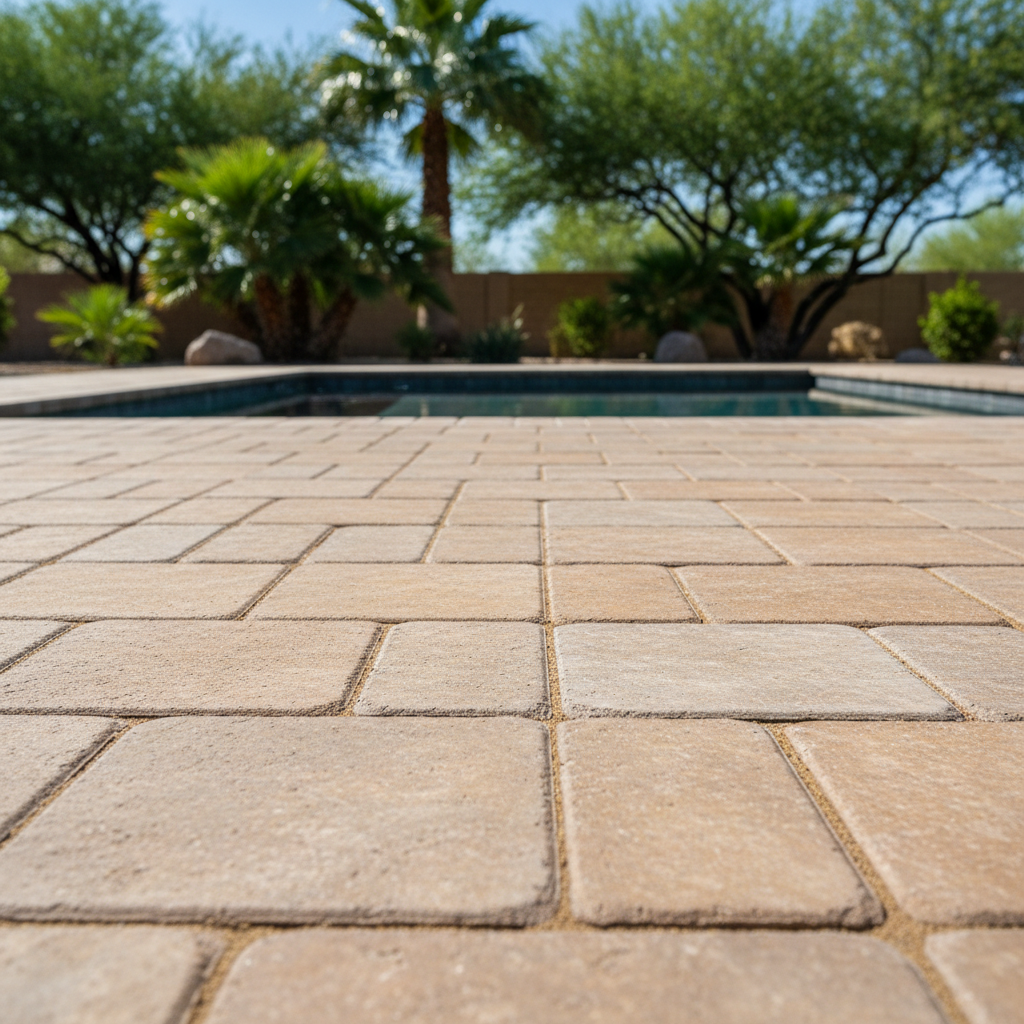
What's the best material for a pool deck in Queen Creek, considering our intense sun and heat?
Alright, this is probably the number one question I get. You're right to ask, because what works in, say, Oregon, isn't going to cut it here in Queen Creek. We're talking 115-degree summers, direct sun beating down for hours, and then cool nights. Wood, even treated, needs a lot of upkeep and can splinter or warp over time with that kind of abuse. Concrete is a classic, and it's durable, but it gets scorching hot and can crack if not installed right, especially with our expansive clay soils around areas like Johnson Ranch. For most folks, I steer them towards pavers or composite materials specifically designed for outdoor, high-traffic, wet areas. Pavers, especially lighter colors, stay cooler underfoot and are easy to replace if one gets damaged. Composites have come a long way; they're not all the same, so you need to pick one rated for high UV exposure and heat. They resist fading, don't splinter, and clean up easy.
How can I make my pool deck less scorching hot to walk on in the summer?
This is a big one, especially if you've got kids or pets. Barefoot on a concrete deck in July? Forget about it. The material choice is huge, like I just mentioned. Lighter colors reflect more sunlight, so a light tan paver or a gray composite is going to be cooler than dark brown or black, no contest. Beyond that, consider shade. A well-placed pergola or sail shade can make a world of difference. Even planting some shade trees, if you've got the space and patience, helps cool the whole area down. There are also some cool deck coatings out there designed to reduce surface temperature. They're not magic, but they can drop the temperature by 10-20 degrees, which is a big deal when it's 110 out. Just make sure whatever you choose is slip-resistant when wet.
What kind of maintenance does a pool deck need in our desert environment?
It really depends on the material. If you go with natural wood, you're looking at annual cleaning, sanding, and resealing or staining. It's a commitment. Concrete needs occasional cleaning, maybe pressure washing, and sealing every few years to prevent staining and protect against our hard water. Pavers are pretty low-maintenance; sweep them, rinse them, and maybe reseal the joints every few years to keep weeds out and sand in. Composites are probably the easiest – a good scrub with soap and water usually does the trick. The biggest thing for any material around a pool here is dealing with hard water stains and algae. Our tap water leaves mineral deposits that can be a pain, so regular rinsing helps. And with the humidity around a pool, algae can pop up, so a good scrub with a mild cleaner is important.
My current pool deck is cracked/uneven. Can it be repaired, or do I need a full replacement?
It depends on the extent of the damage. Small, hairline cracks in concrete can often be repaired with patching compounds and then sealed. If you have larger, structural cracks, or significant heaving and settling, especially common with our expansive soils if the base wasn't prepped right, then you might be looking at a bigger job. Sometimes we can remove and replace just the damaged sections, especially with pavers. If the entire slab is shifting or has major issues, a full tear-out and proper re-grading and base prep is usually the best, long-term solution. You don't want to just cover up a problem that's going to keep getting worse. I'll always give you an honest assessment when I come out to look at it.
How long does a typical pool deck installation take?
This varies a lot based on the size of your deck, the material you choose, and what kind of prep work is needed. If we're just resurfacing an existing, solid concrete slab, that's quicker – maybe a few days to a week. A full tear-out and new installation, especially with pavers or a complex composite design, can take anywhere from one to three weeks. That includes excavating, laying a proper base, installing the material, and then any finishing touches like sealing or landscaping. Weather plays a role too; you don't want to be pouring concrete or laying pavers in a monsoon, which we get a couple of times a year. We always try to give you a clear timeline upfront, and we work efficiently to get you back to enjoying your pool as fast as possible. Done Right Decks of Queen Creek prides itself on getting jobs done right and on schedule.
What permits do I need for a new pool deck in Queen Creek?
Good question, and one that often gets overlooked. For most pool deck projects, especially if you're just replacing an existing deck with similar materials and not changing the footprint significantly, you might not need a full building permit. However, if you're expanding the deck, adding new structures like pergolas that are attached to the house, or doing significant grading work, you absolutely will need permits. The Town of Queen Creek has specific requirements, especially concerning setbacks from property lines and drainage. It's always best to check with the planning department or have your contractor handle this. We always make sure we're compliant with all local codes and regulations before we start any work, so you don't have any headaches down the road.